Behind the soaring vocal range and the groundbreaking catalog of Soundgarden, Temple of the Dog, and Audioslave, Cornell repeatedly turned to his art to navigate psychological isolation, substance dependency, and the compounding losses of his peers.
Cornell’s creative impulse began not in the spotlight, but in withdrawal. Having experimented with alcohol and marijuana around age 12, he later dropped out of school and spent nearly two years largely confined to his mother’s home.

A tower of insights, experiences and opinions
Art in all forms. That is what we are all about - and now you can join our world. We need you - and we believe you need us too. Let us share dreams and visions!
Unlike Cornell’s customary method of crafting hybrid fictional characters, the compositions of “Say Hello 2 Heaven” and “Reach Down” for Temple of the Dog directly confronted grief and a real human being
Reflecting on that period in interviews, he characterised himself as an extreme loner who felt paralysed around people.

Who the *?#% is this band? 1st single, apparently: Mama's Baby!
The album in physical form can be purchased solely at vinyl store Beat, Enghave Plads, Copenhagen.
The Turning Point
The turning point arrived when his mother purchased him a snare drum, an act he credited with saving his life. Channeling rhythmic practice and songwriting as coping mechanisms during his self-imposed seclusion, Cornell laid the musical foundation that led to the formation of Soundgarden in 1984.
As the Seattle music community surged toward international recognition, personal tragedy severed its early camaraderie. In March 1990, Andrew Wood, frontman of Mother Love Bone and Cornell’s close friend and former roommate, died of a heroin overdose at age 24.
Cornell described Wood’s passing as the sudden “death of the innocence of the scene.”
Devastated while touring Europe with Soundgarden, he wrote “Say Hello 2 Heaven” and “Reach Down.” Unlike his customary method of crafting hybrid fictional characters, these compositions directly confronted grief and a real human being.
The Aftermath
Cornell recalled of the aftermath: “I don’t really remember doing much else after the funeral other than just being swept up in the grief of the moment… these lyrics specifically reflected Andy and my feelings about him.”
Cornell explained that Soundgarden’s 1994 track “Fell on Black Days” captured the sudden terror of unprovoked depressive episodes
Reaching out to Wood’s bandmates Stone Gossard and Jeff Ament, Cornell initiated a tribute single that grew into the 1991 self-titled album Temple of the Dog, introducing guitarist Mike McCready and guest vocalist Eddie Vedder.
Throughout the 1990s, Cornell consistently documented the unpredictable nature of mental illness. He explained that Soundgarden’s 1994 track “Fell on Black Days” captured the sudden terror of unprovoked depressive episodes.
In broader cultural reflections, particularly during the Audioslave era, Cornell analysed the existential crisis that gripped grunge bands when anti-commercial punk values clashed violently with corporate stardom, noting that “we all kind of had that crisis of mind, and Kurt shooting himself was probably that to the extreme.”
In public commentary, Cornell expressed both acute sensitivity to the fallout of suicide and deep regret over its permanence. Reflecting on the finality of self-inflicted death, he observed: “If he would have just kind of hung on for six months, who knows, six months later he would have been a completely different guy.”
Cornell: Reflections on Suicide
In another interview, he addressed the personal stakes of such an act: “You don’t know what drives somebody to do that, but if I ever committed suicide, I would do it in a way that meant no one ever knew that it was suicide—because to me, the biggest fear of killing myself would be what it would do to my friends and family.”
While Soundgarden had maintained an ethos of performance sobriety, the band’s demise stripped away Cornell’s structural guardrails
The stability that anchored his early career faltered after Soundgarden disbanded in 1997. Coupled with a divorce from his manager-wife Susan Silver, Cornell experienced a decline into alcoholism and prescription painkiller dependency, including OxyContin abuse. While Soundgarden had maintained an ethos of performance sobriety, the band’s demise stripped away his structural guardrails.
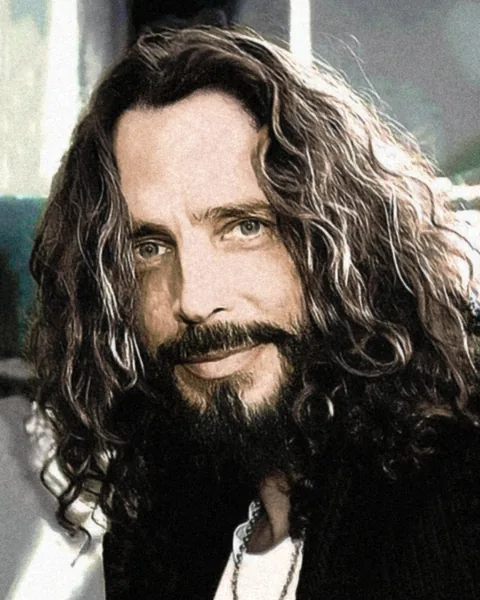
In late 2002, during the early recording stages of Audioslave, his new bandmates confronted him about his condition. Cornell entered a residential rehabilitation facility between late 2002 and early 2003, openly confirming his treatment in a January 2003 interview with Spin. Cornell remained committed to sobriety for more than a decade, earning the Stevie Ray Vaughan Award from the MusiCares MAP Fund in 2007 for assisting other artists in recovery.
Artistic misunderstandings still shadowed his work. Audioslave’s 2002 hit “Like a Stone” was frequently interpreted as a death wish or a romantic lament, but Cornell clarified to bassist Tim Commerford and in interviews that the track was actually a philosophical exploration of an ageing, solitary figure contemplating the afterlife apart from religious dogma.
Fallen Friends
Yet the memory of fallen friends continued to linger.
In an October 2008 essay on his personal blog, Cornell recounted a dream about Alice in Chains singer Layne Staley, voicing survivor guilt over not intervening when Staley broke down in tears following Andrew Wood’s death in 1990.
Cornell also expressed lingering anger at the platitudes offered at Staley’s funeral: “I kept hearing the ‘twice-as-bright-half-as-long’ speech and the ‘he-was-just-too-special-for-this-world’ nonsense that I had heard at so many other funerals for so many other friends that were so young and talented.”
On May 17, 2017, Soundgarden played a sold-out show at the Fox Theatre in Detroit as part of a national tour. Hours later, in the early morning of May 18, Cornell was found unresponsive in his bathroom at the MGM Grand Detroit hotel. The Wayne County Medical Examiner’s Office officially ruled his death a suicide by hanging.
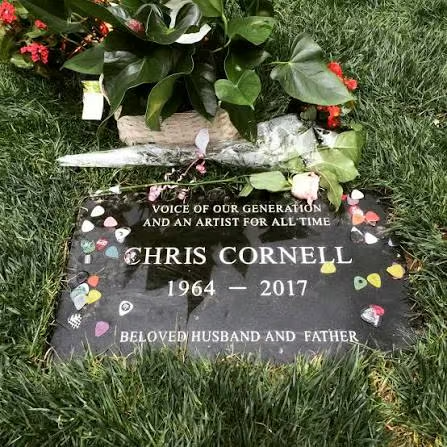
A toxicology report released in June 2017 confirmed the presence of lorazepam (Ativan), barbiturates (Butalbital), caffeine, pseudoephedrine, and naloxone, though the assistant medical examiner formally concluded: “These drugs did not contribute to the cause of death.”
Not a Deliberate Endgame. The Diabolic Role of Ativan
Cornell’s family, led by his widow Vicky Cornell, disputed the official finding that he had consciously chosen to end his life. While Cornell had maintained long-term sobriety, his family and legal counsel stated that he had relapsed on prescription Ativan taken for acute shoulder pain and anxiety.
Cornell’s voice documented the fragile boundaries between survival and surrender, leaving behind an artistic legacy defined by honesty in the face of profound pain
They maintained that severe medication-induced impairment, delirium, and slurred cognition—audible in phone calls with his wife minutes before his death—had robbed him of rational intention. Across a lifetime spent examining darkness, grief, and recovery,
Cornell’s voice documented the fragile boundaries between survival and surrender, leaving behind an artistic legacy defined by honesty in the face of profound pain.