
What happens when the distance between a visionary and a fraudster becomes almost impossible to navigate emotionally? And what happens when an entire culture is built around the seductive idea that reality is merely something waiting to be reinvented?
Elizabeth Holmes has 34 days left before she begins serving her prison sentence in Texas. A film crew enters her rented home in San Diego, California. Director Nathan Fielder effectively moves into the guest bedroom. Over the following weeks, he becomes part of the domestic universe of one of Silicon Valley’s most controversial figures.

Who the *?#% is this band? 1st single, apparently: Mama's Baby!
The album in physical form can be purchased solely at vinyl store Beat, Enghave Plads, Copenhagen.
He listens, observes and challenges. And inevitably, he develops a complex human bond with Elizabeth and her young family.
What follows is 174 minutes of conversations, psychological ambiguity and extraordinarily revealing close-ups. Faces become narratives in their own right.

A tower of insights, experiences and opinions
Art in all forms. That is what we are all about - and now you can join our world. We need you - and we believe you need us too. Let us share dreams and visions!
Elizabeth Holmes, Billy Evans, Nathan Fielder and Amanda Seyfried. Four people caught up in a cinematic exploration of the fragile boundaries between reality, performance and belief.
Silicon Valley: Where Utopia Meets Capital
Silicon Valley is not simply a geographical location. It is a state of mind.
Money alone does not explain Silicon Valley. Its real currency is belief. It is a mythology in which imagination and utopia feed off one another
Since the 1970s, the region has established itself as one of the world’s most powerful centres of technological innovation. Stanford University, where Holmes studied before embarking on her entrepreneurial adventure, occupies a central position in the ecosystem connecting intellectual ambition, technological experimentation and private capital.
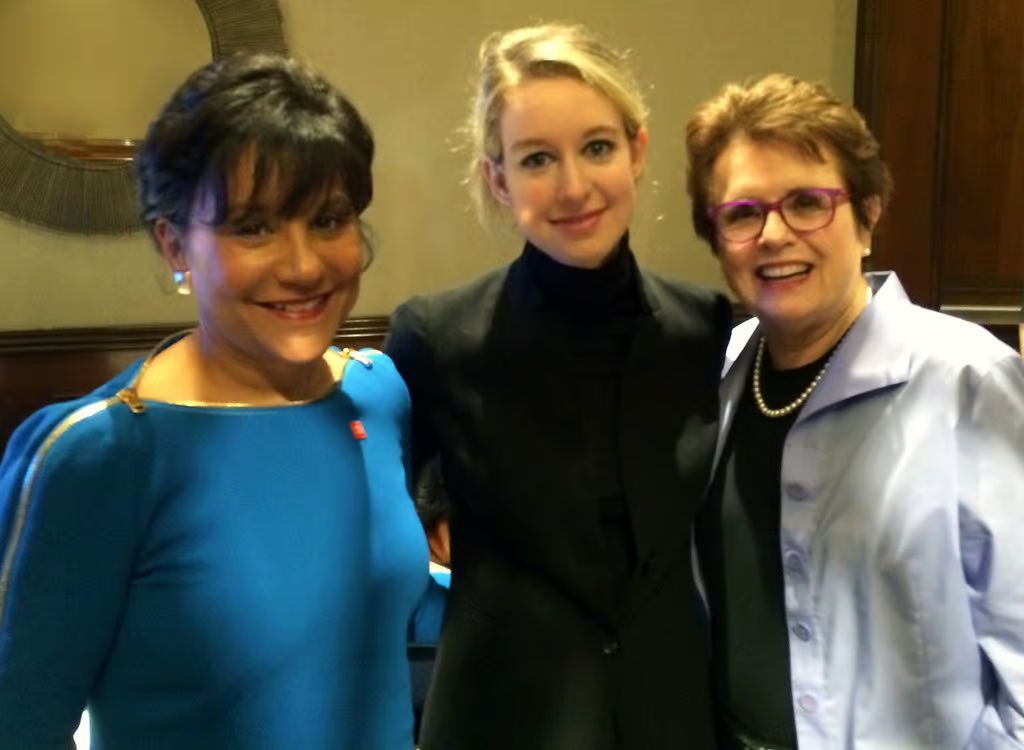
Between 2015 and 2024, Greater Silicon Valley accounted for an average of approximately 40 per cent of annual US venture capital investment. But money alone does not explain Silicon Valley. Its real currency is belief.
Silicon Valley is also a culture hungry for female entrepreneurial icons. Being attractive hardly constitutes a disadvantage. Elizabeth Holmes fitted the mythology almost perfectly
It is a mythology in which imagination and utopia feed off one another. Where an extraordinary idea, communicated with sufficient charisma and conviction, can attract billions before its technological foundations have been established.
It is also a culture hungry for female entrepreneurial icons in industries historically dominated by men. Being attractive hardly constitutes a disadvantage. Elizabeth Holmes fitted the mythology almost perfectly.
Young, charismatic, ambitious, visionary – and apparently determined to change the world.
When the Dream Outruns Reality
Was Elizabeth Holmes driven by a genuine vision? Almost certainly. Was she equally driven by money, power and personal ambition? Possibly. But the precise nature of her motivations remains considerably more elusive.
Following the founding of Theranos in 2003, the company experienced a spectacular ascent. Billions in investment eventually poured in. Holmes became a media phenomenon, a billionaire on paper and the chair and chief executive of her own technological empire.
Alongside her was Ramesh ‘Sunny’ Balwani, the company’s chief operating officer and, secretly, her romantic partner.
Then reality intervened. Theranos could not deliver on its promise of a revolutionary, iPod-sized device capable of performing multiple diagnostic blood tests. The technology worked only in theory, in spirit, in dreams and on the wings of faith.
The illusion collapsed. Lawsuits, claims for damages, devastating media coverage, four criminal convictions and a prison sentence of more than eleven years followed.
The dream was over. Or was it?
Amanda Seyfried and the Gravity of Elizabeth Holmes
There are remarkably few actors in You Can See Everything. Christopher Abbott appears as Billy in a handful of sequences, while Amanda Seyfried portrays Elizabeth in scenes from her early youth and in reconstructions of the period following her imprisonment.
That is my emotional response to Elizabeth on screen, not a verdict on her innocence
Watching Seyfried, I find myself confronted with an intriguing question. Is this exceptionally accomplished method acting, or is the actress herself being drawn into the emotional and psychological gravity of Elizabeth Holmes?

To me, she appears genuinely affected, and that makes a powerful impression. Because Elizabeth has that effect.
The following observations are entirely my own, made perhaps more as an observer of human nature than as a film critic.
I find it almost impossible not to be fascinated by, and experience a peculiar sense of sympathy and concern for, this dreamy, charmingly naïve woman who appears to inhabit an innocent, trusting and philanthropic parallel universe.
That is my emotional response to the woman on screen, not a verdict on her innocence.
Is Nathan playing a role? Is his apparent emotional involvement part of a larger artistic construction? Perhaps, perhaps not. I do not experience him as doing so, but Fielder leaves that territory open for us to explore.
Love in the Age of Artificial Immortality
Billy Evans is another fascinating presence. Elizabeth’s partner emerges as her knight and protector. He appears to share her vision, her dreams and her emotional universe. Yet there are moments when devotion begins to look like something more complicated.
He presents Nathan with an ultimatum, demanding a share of the film’s earnings. He also introduces the idea of allowing Elizabeth to remain present during her imprisonment through an AI-generated version of herself. Not just for their children, but for the world.
At what point does an act of love become an act of appropriation?
As presented in the film, Billy orchestrates the presence of a virtual Elizabeth in videos and on enormous billboards in public spaces while the real Elizabeth remains behind prison walls – possibly without her knowledge or consent.
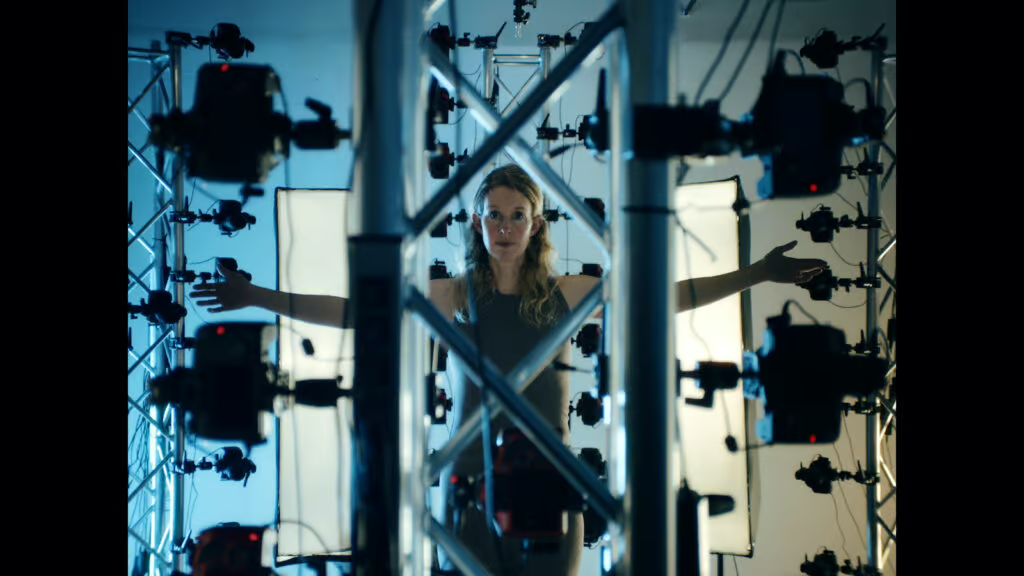
The implications are extraordinary. Who owns the image of another human being? Who controls their digital identity? And at what point does an act of love become an act of appropriation?
There is something genuinely romantic about Elizabeth and Billy talking about building ‘monuments to love’ for one another every day. But in Billy’s case, the boundaries appear fluid.
His company Haemanthus, founded in 2022, adds another dimension to the story. Elizabeth is allegedly advising him unofficially from her prison cell, the ambition being to develop what might effectively constitute a version 2.0 of Theranos’s miraculous device.
The vision lives on.
Is Billy exercising some form of power over Elizabeth? Or are we witnessing an almost radical form of unconditional loyalty?
Nathan Fielder: The Auteur Who Refuses to Tell Us What to Think
Nathan Fielder has spent years stretching the boundaries of reality television. Through productions such as Nathan for You and The Rehearsal, he has developed a distinctive approach to social and psychological experimentation, challenging people’s routines, reflexes and carefully constructed emotional defence mechanisms.
Fielder gives us no comfortable moral exit. We must navigate the unstable territory between fiction and reality, perception and evidence, empathy and justice ourselves
His underlying artistic mission appears to be the cultivation of more authentic human relationships in a culture increasingly defined by acceleration, superficiality and self-protection.
With You Can See Everything, that mission reaches its apex to date. Fielder is a maestro of emotional inquiry.
What makes his approach so compelling is his dual position within the film. He is simultaneously a concealed auteur and a participant in the documentary narrative. Not once does he cast a knowing glance towards the camera.

He does not retreat into the comfortable position of the filmmaker who knows more than his subjects. Beyond his critical and empathetic questioning, he places himself on an equal footing with the other participants. He observes without delivering a verdict.
And through that method, something remarkable happens. The camera does not merely document an encounter between Fielder and Elizabeth Holmes. It draws us into that encounter.
We become eyewitnesses, interpreters and, potentially, judges.
Fielder gives us no comfortable moral exit. We must navigate the unstable territory between fiction and reality, perception and evidence, empathy and justice ourselves. That is where the film’s artistic power resides.
What If Elizabeth Holmes Is Also a Symptom?
You Can See Everything is intensely intimate in its portraits and deeply disturbing in its underlying metanarrative. We find ourselves emotionally divided. Sympathy and compassion surface, yet we cannot look away from the monstrous scale of the wrongdoing perpetrated by Holmes and Theranos, or its potentially devastating consequences for patients.
What if Elizabeth Holmes is also an embodiment of – and an extreme symptom of – the delusions of grandeur and the quasi-pathological culture embedded within Silicon Valley’s mythology and modus operandi?
Her criminal responsibility is not erased by the complexity of her personality. But individual guilt does not absolve the culture surrounding her.
What if Elizabeth Holmes is also an embodiment of – and an extreme symptom of – the delusions of grandeur and the quasi-pathological culture embedded within Silicon Valley’s mythology and modus operandi?
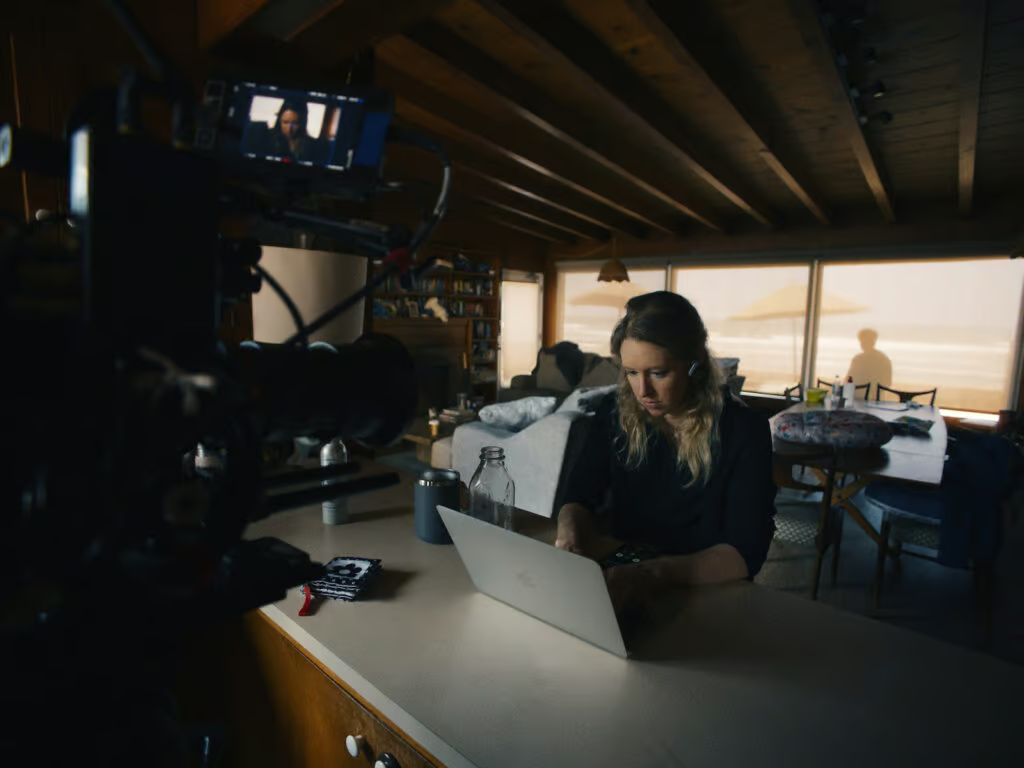
A culture that celebrates disruption, rewards audacity and sometimes allows the seductive power of a vision to outrun the evidence supporting it.
When does creative fearlessness become recklessness? When does challenging conventional wisdom become a refusal to acknowledge reality? And who bears responsibility when an entire ecosystem invests in the dream?
The films emotional contradictions remained unresolved for me. Its cultural implications became increasingly disturbing
These are not questions with comfortable answers. Nor should they be.
The film continued to churn and revolve in my mind for several days afterwards. Its emotional contradictions remained unresolved. Its cultural implications became increasingly disturbing.
Great cinema does not necessarily provide clarity. Sometimes, its greatest achievement is to make our existing certainties considerably less comfortable.
You Can See Everything does precisely that.
It is nothing short of a masterpiece.