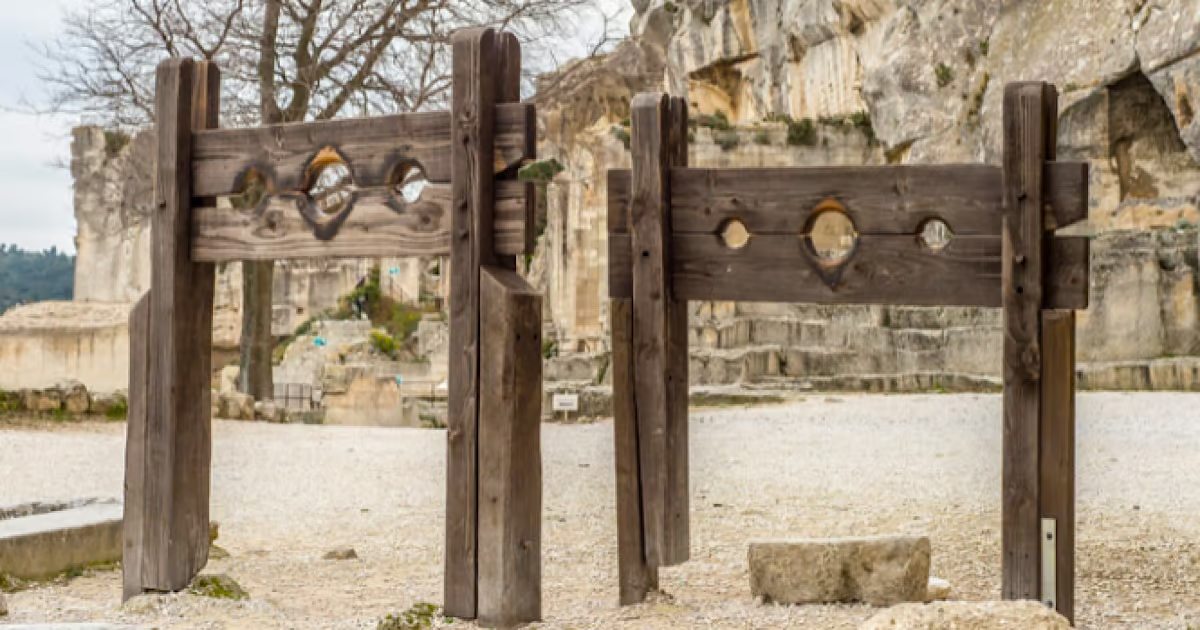

On a Danish beach in the 1970s, nobody cared much who was looking.

The Easiest Way to Stay GDPR-Compliant
Topless sunbathers lay scattered across the sand. Cameras clicked. Newspapers published photographs from festivals, demonstrations, and summer celebrations. The body was visible, public, and remarkably uncontroversial.
Half a century later, the debate has shifted dramatically.
Today, freedom increasingly means something different. Not the right to show the body, but the right to control its image. Few countries have undergone a cultural transformation as striking as Denmark’s.
As contemporary grievance culture has expanded, the threshold for what constitutes a violation has steadily fallen
ADVERTISEMENT
Design. Build. Launch. No Code Needed.
From portfolio websites to full webshops – Elementor lets you build custom WordPress sites visually, fast and beautifully. Join 14M+ users who choose freedom, flexibility, and full design control.

In 1969, Denmark became the first country in the world to legalize pictorial pornography. Roskilde Festival became synonymous with naked runs, mud baths, and a relaxed relationship with nudity that much of the world viewed with a mixture of fascination and disbelief.
Danish liberalism was never merely about sex. It rested on a deeper assumption: that adults could handle freedom. That people could encounter things they disliked, found offensive, or considered inappropriate without requiring institutions, authorities, or moral guardians to intervene on their behalf.
Consent and Grievance Culture
The debate over creepshots offers a revealing example.
Of course, some forms of photography are deeply invasive. The cynical monetization of intimate images is not merely distasteful but criminal. There are situations where people are exploited or sexualized against their will, and there is no reason to minimize that reality.
But cultural shifts rarely stop at the most obvious abuses.
As contemporary grievance culture has expanded, the threshold for what constitutes a violation has steadily fallen. The focus moves away from the act itself and toward the subjective experience of the person involved. Objective boundaries give way to personal feelings.
The new belief: That individuals should have control over every image, narrative, and piece of information connected to themselves
The result is a society where an ever-growing number of interactions require explicit consent in order to be considered legitimate.
Not only sex. Not only relationships that occupy legal or moral grey zones. Gradually, the logic extends to ordinary social interaction, humor, conversation, photography, and public exposure itself.
The Dramatic Cultural Shift
This marks a profound departure from the culture that once made Denmark one of the world’s most open societies.
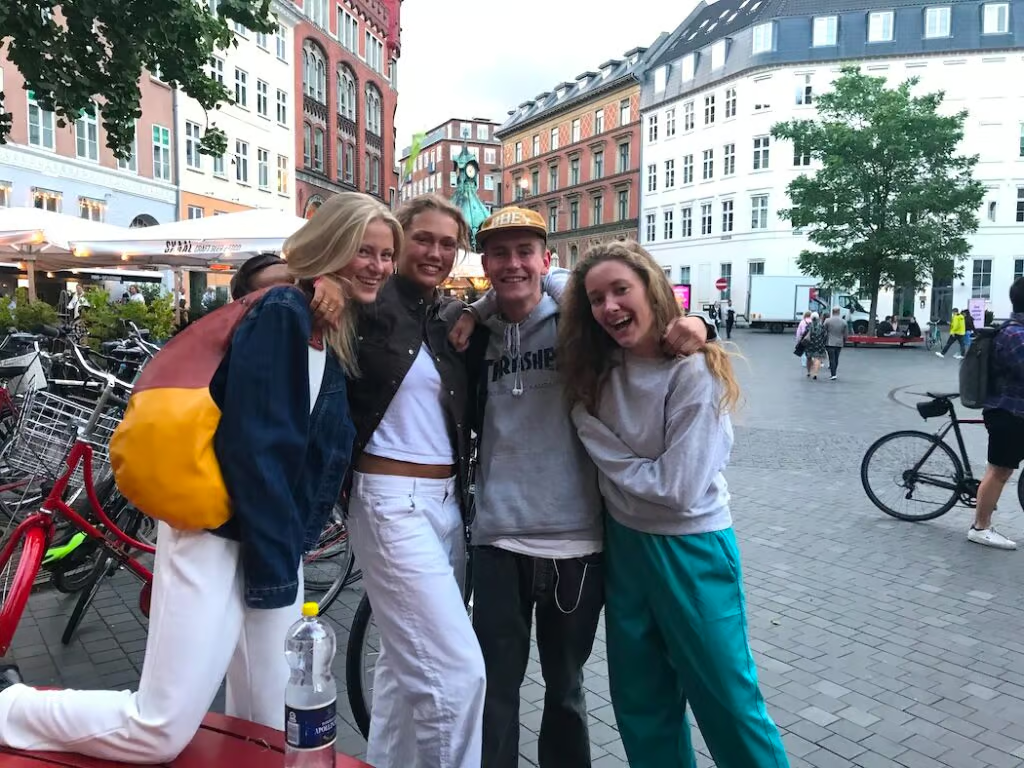
For decades, public space was understood to be exactly that: public. Festivals, demonstrations, sporting events, and street celebrations were documented by journalists, photographers, and ordinary passersby. One might appear in a newspaper photograph or television report without actively consenting to it.
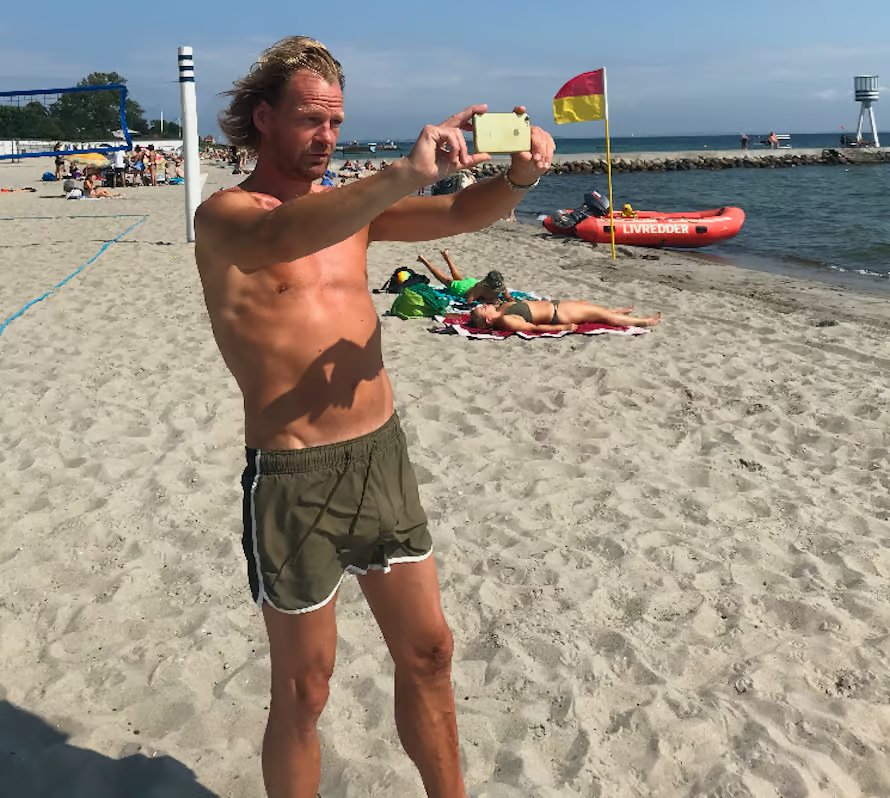
That was considered a natural consequence of participating in public life.
Today, a different logic is gaining ground. The belief that individuals should have control over every image, narrative, and piece of information connected to themselves. That people should, in practice, be able to approve their own representation in public.
At first glance, the idea sounds perfectly reasonable.
The difficulty is that such a principle can only be realized through ever greater regulation and control. The more individual control we demand, the less room remains for spontaneity. The more rights we create not to be exposed, the fewer freedoms remain to document reality as it unfolds.
It is not difficult to imagine where this trajectory leads.
A Future of Prohibitions
In the grievance culture of the future, the issue may no longer be hidden photographs but unwanted photographs. Not merely sexual exploitation, but any public exposure the subject finds objectionable.
Perhaps festivals, beaches, and public parks will introduce photography-free zones. Perhaps facial-recognition systems will automatically blur anyone who has not provided digital consent. Heavy fines and criminal penalties may become the preferred tools of enforcement.
Are we sliding toward a society in which freedom is increasingly defined as protection from unwanted experiences? That is the real cultural conflict.
And perhaps the right to one’s image will evolve into something even broader: the right to control one’s own narrative.
If individuals are entitled to control every image of themselves, why not also quotations, references, descriptions, or public interactions? Why not demand approval over every representation made by others?
The logic contains no obvious endpoint.
The Paradox of Freedom and Free Spirit
Which is why the creepshot debate is ultimately about much more than creepshots.
It is about whether we still believe in the older tradition of Danish liberalism: the belief that people can live in a society where they are occasionally photographed, quoted, contradicted, mocked, or exposed without having chosen it themselves.
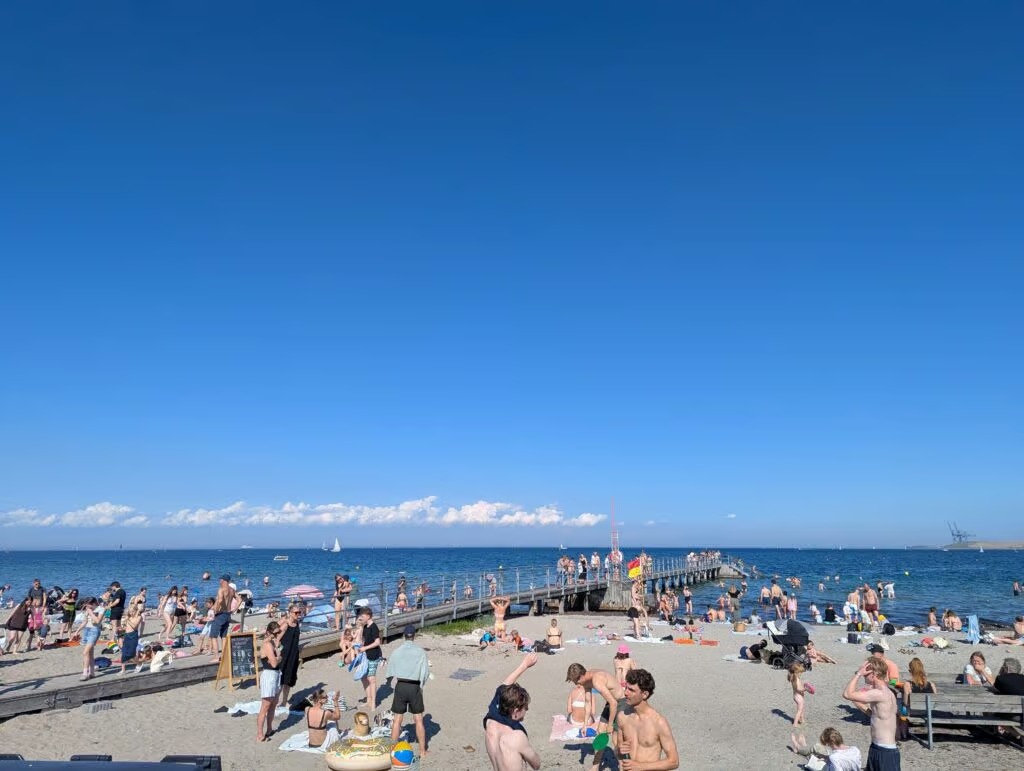
Or whether we are moving toward a society in which freedom is increasingly defined as protection from unwanted experiences. That is the real cultural conflict.
Not between left and right. Not between men and women. But between two competing understandings of freedom. One is built on resilience and tolerance for the unwanted. The other is built on control and protection from the unwanted.
Denmark did not become a liberal society because Danes never felt offended, embarrassed, or violated. Denmark became a liberal society because it accepted that freedom inevitably includes the risk of feeling that way.
Perhaps that is the insight now slipping from view.