Some artists work hard to look cool. Mikael Simpson simply walks on stage.
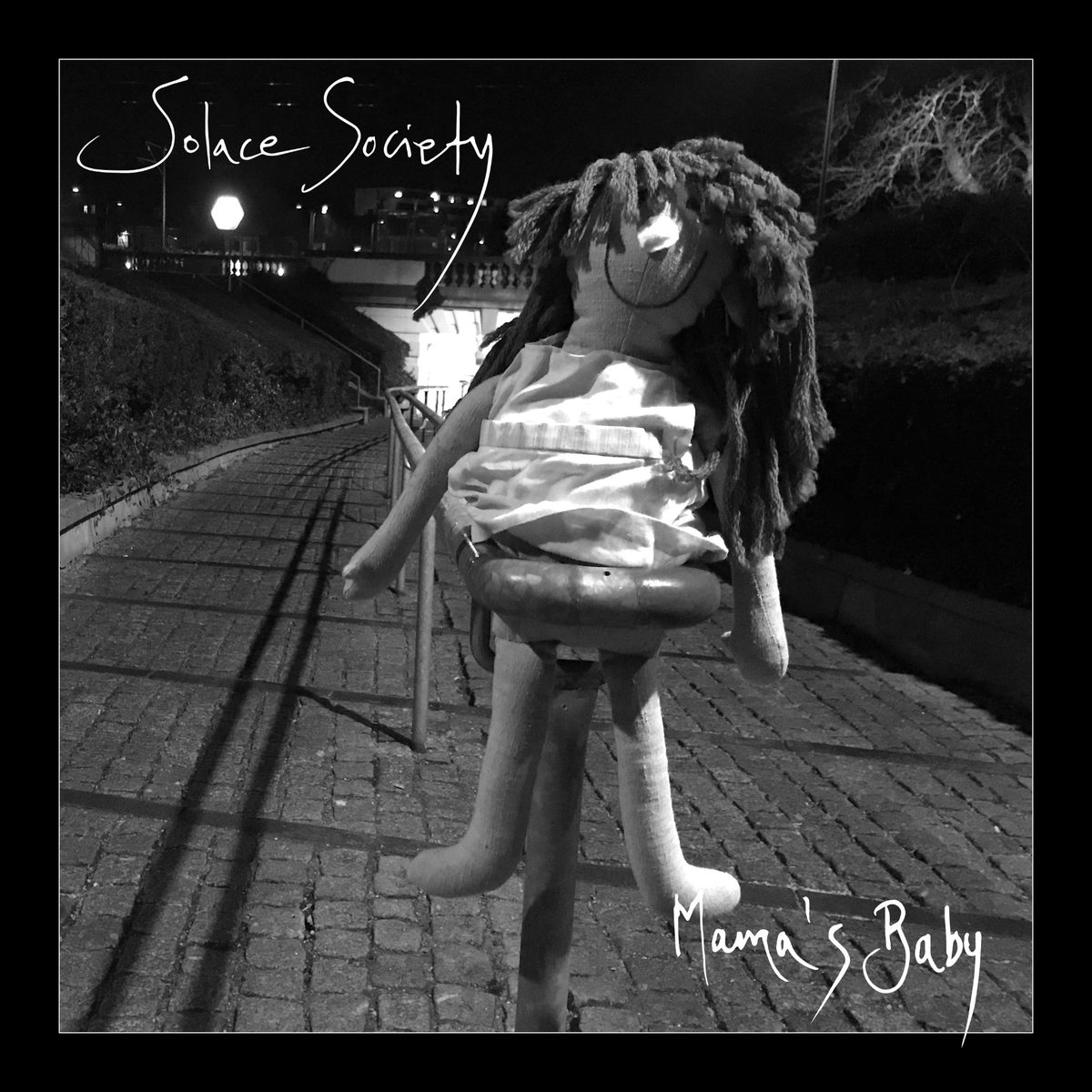
Who the *?#% is this band? 1st single, apparently: Mama's Baby!
The album in physical form can be purchased solely at vinyl store Beat, Enghave Plads, Copenhagen.
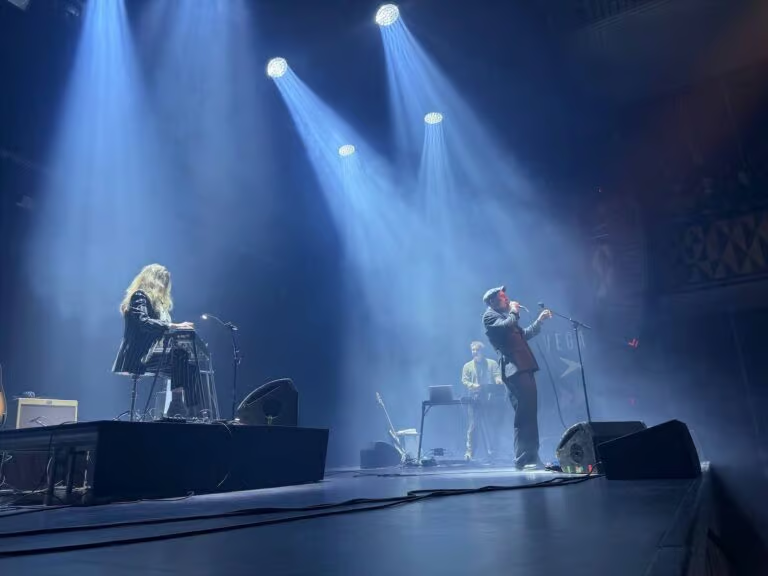
Grey suit. Matching flat cap. An almost disarming sense of calm. No grand gestures, no desperate attempts to reconnect with an audience after fifteen years away from solo releases.
A tower of insights, experiences and opinions
Art in all forms. That is what we are all about - and now you can join our world. We need you - and we believe you need us too. Let us share dreams and visions!
Just a man who knows exactly what he is doing.
And an audience ready to listen.
Simpson has always occupied a distinctive corner of Danish music. Somewhere between indietronica, urban melancholy, dry humour and the kind of existential observations that sound almost casual until they hit you.
He is the flâneur, the outsider, the reluctant philosopher. A man who seems both alienated from the world and strangely at home in it.
His lyrics explore the uncomfortable spaces of everyday life: the habits we repeat, the phrases we never question, the small contradictions that make being human such a complicated business.
There is darkness here, certainly. But also tenderness.
And beneath the melancholy, a persistent sense that life is too absurd not to laugh at.
Fifteen Years Later, Still on His Own Frequency
Born and raised in Holstebro, far from Denmark’s metropolitan music scene, Simpson first emerged as guitarist with Luksus in the 1990s.
His solo career began in 2002, and with Stille og uroligt in 2006, he established himself as one of Denmark’s distinctive voices in indietronica.
Electronic textures, understated vocals and lyrics that treated the Danish language as something to experiment with rather than simply communicate through.
Five solo albums followed before the long silence after 2011.
But silence is relative.
Simpson continued composing for Danish films and collaborating with artists including Trentemøller. His career also took him into international settings connected with Pet Shop Boys and Depeche Mode, while collaborations with Jørgen Leth and Frithjof Toksvig added further dimensions to his creative output.
He never really disappeared.
He just stopped releasing solo albums.
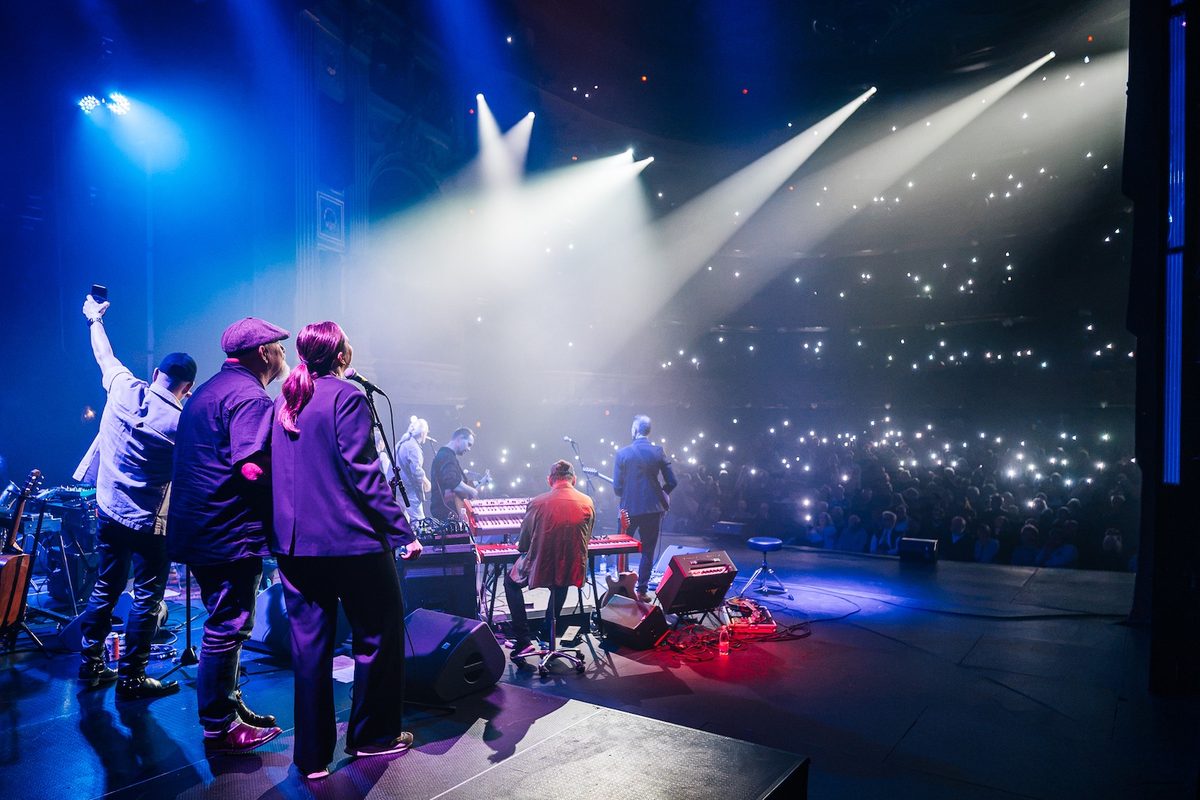
Now Æterdrøm has arrived, on vinyl, naturally. Released at midnight on Friday 13 November 2026, the album coincided with the first of two sold-out comeback concerts at Store Vega.
Friday the 13th. A fifteen-year wait. Two packed nights.
If the timing was deliberate, it was beautifully judged.
No Support Act. No Panic. Just Simpson.
The evening doesn’t unfold entirely according to plan.
Go With Peace Mirabelle, scheduled to open the show, have cancelled at short notice because of illness. There is no replacement.
Instead, the audience waits an hour.
Simpson later explains the backstage situation with a particularly colourful Danish expression.
“I was sitting backstage shitting green pigs while trying to put together a playlist.”
In other words, things were getting a little chaotic.
The playlist never quite happened.
But when Simpson finally takes the stage, the atmosphere changes.
He has that rare quality of making an audience feel that nothing needs to be rushed. Every movement appears unforced. Every gesture belongs.
The way he handles his instruments, delivers a line or simply stands between songs carries the same understated confidence.
It isn’t indifference.
It is control without the performance of control.
And it suits him.
The Art of Making Darkness Sound Beautiful
There are just three musicians on stage.
Pedal steel, bass and grooves form the musical foundation, with Simpson occasionally adding electric guitar.
The arrangements leave space for the lyrics, for the silences between phrases and for the peculiar emotional tension that defines his work.
Simpson isn’t a conventional singer. He doesn’t need to be.
His voice sits in a comfortable baritone, delivering words with the intimacy of conversation and the precision of someone who understands exactly where a sentence should land.
There is something of Beck in his detached confidence, and a closer contemporary parallel might be Nate Amos and his work as This Is Lorelei.
Not because they sound identical, but because they share an ability to make the unconventional feel entirely natural.
Then Simpson picks up his electric guitar.
Phaser and reverb stretch the sound into atmospheric passages that occasionally suggest Pink Floyd’s The Dark Side of the Moon or Animals.
It is a different side of his musical personality, and an unexpectedly beautiful one.
Later, the harmonica will provide another surprise.
But the centre of gravity remains his words.
Danish Words, Twisted Meanings
Simpson has always written in Danish.
And his lyrics are one of the strongest arguments for staying with your native language when that language is part of your artistic identity.
Du drømmer om et andet sted.
Jeg har ikke styr på lortet.
Jeg har lort på styret.
Gode dyr er rådne.
Du er små smuk, jeg falder i.
Ved ik besked.
Hva så med i morgen?
Nej tak for i aften.
Fragments of ordinary language. Familiar expressions pushed into unfamiliar territory.
Some arrive like throwaway remarks. Others feel like small philosophical accidents.
Simpson dismantles clichés, rearranges idioms and turns everyday speech into miniature scenes of confusion, humour and recognition.
The effect can be funny, unsettling or quietly devastating.
Sometimes all three.
Could he make music in English?
Almost certainly.
But the question is what would survive the translation.
Think of Danish artists such as Nikolaj Nørlund, Povl Dissing, Gasolin’ or tv·2. Their relationship with the language is inseparable from their artistic identity.
Simpson belongs in that conversation.
His music might travel internationally, but his words are rooted in a particular cultural landscape.
And there is something refreshing about an artist who has never appeared desperate to escape it.
Cool Is a State of Mind
What makes Simpson compelling live is the tension between the man and his material.
The lyrics are restless, sometimes troubled, frequently contradictory.
The performer is almost impossibly calm.
He moves through songs about uncertainty, alienation and emotional disorder with the relaxed authority of someone who has learned to coexist with all three.
No theatrical suffering. No exaggerated vulnerability.
Just an artist allowing the contradictions to speak for themselves.
The music moves between electronic grooves, soft refrains and moments of atmospheric expansion.
It can feel intimate one moment and unexpectedly expansive the next.
And throughout, Simpson remains unmistakably himself.
One Last Song Before Sleep
For the final encore, Simpson chooses Lige inden du falder i søvn.
My photographer, Lærke, has already predicted it.
The song unfolds with the same easy swing that has carried much of the evening.
Then comes the harmonica.
Simpson draws out a beautifully elegiac solo, warm and unhurried, until the final note hangs in the air.
It is also the last note of the concert.
Before that final song, he offers one more perfectly Simpson-like announcement:
“Now you’ll get one last encore. After that, I’ll sign two autographs and go home.”
No dramatic farewell.
No emotional speech about the long road back.
Just a dry observation, delivered by a man in a grey suit and matching flat cap.
Funny, affectionate and probably entirely true.
Fifteen years have passed since Mikael Simpson last released a solo album.
The world has changed. Music has changed. The mechanisms of attention have changed almost beyond recognition.
Simpson?
He still seems to operate on his own frequency.
And that’s exactly why he matters.
Welcome back, Mr Cool.