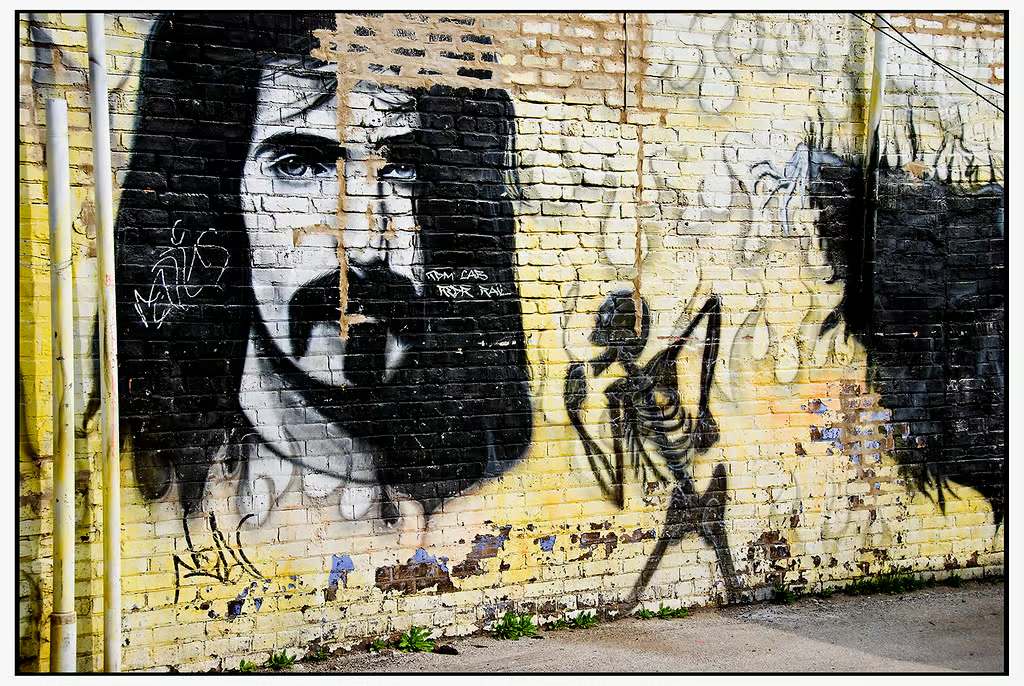
Frank Zappa never really believed in the conventional rock concert. His profound vision was to create a universe in which no sound, idea or form of expression was inherently incompatible with another.
The stage was a laboratory, a cabaret, a theatre of the absurd. A place where musical virtuosity could collide with social satire, grotesque characters and intellectual provocation.
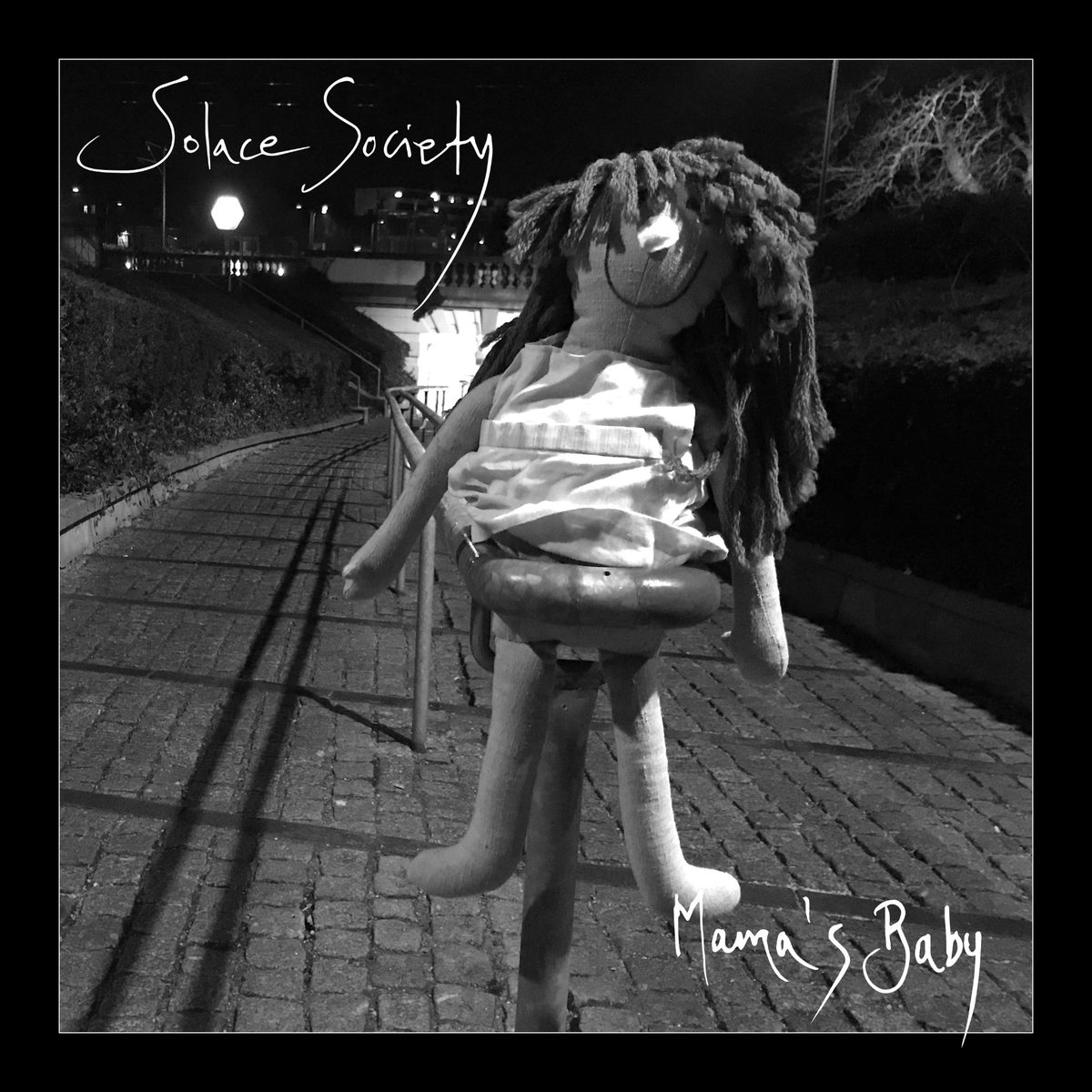
Who the *?#% is this band? 1st single, apparently: Mama's Baby!
The album in physical form can be purchased solely at vinyl store Beat, Enghave Plads, Copenhagen.
Critics from The Village Voice and The Wall Street Journal recognised this early on, describing performances by the Mothers of Invention as something closer to off-off-Broadway musical revues than traditional rock gigs.
At London’s Royal Festival Hall in 1968, in a performance later documented on Ahead of Their Time, Zappa directed a semi-improvised musical play about rebellion within his own band, involving members of the BBC Symphony Orchestra.
A tower of insights, experiences and opinions
Art in all forms. That is what we are all about - and now you can join our world. We need you - and we believe you need us too. Let us share dreams and visions!
The boundaries between concert, composition and theatrical fiction were already dissolving.
The history of Zappa’s theatrical ambitions is littered with unrealised productions. Not because he lacked ideas, but because the machinery of conventional theatre struggled to accommodate them
But Zappa wanted to go further. Much further.
Broadway Couldn’t Afford the Madness
The history of Zappa’s theatrical ambitions is littered with unrealised productions. Not because he lacked ideas, but because the machinery of conventional theatre struggled to accommodate them.
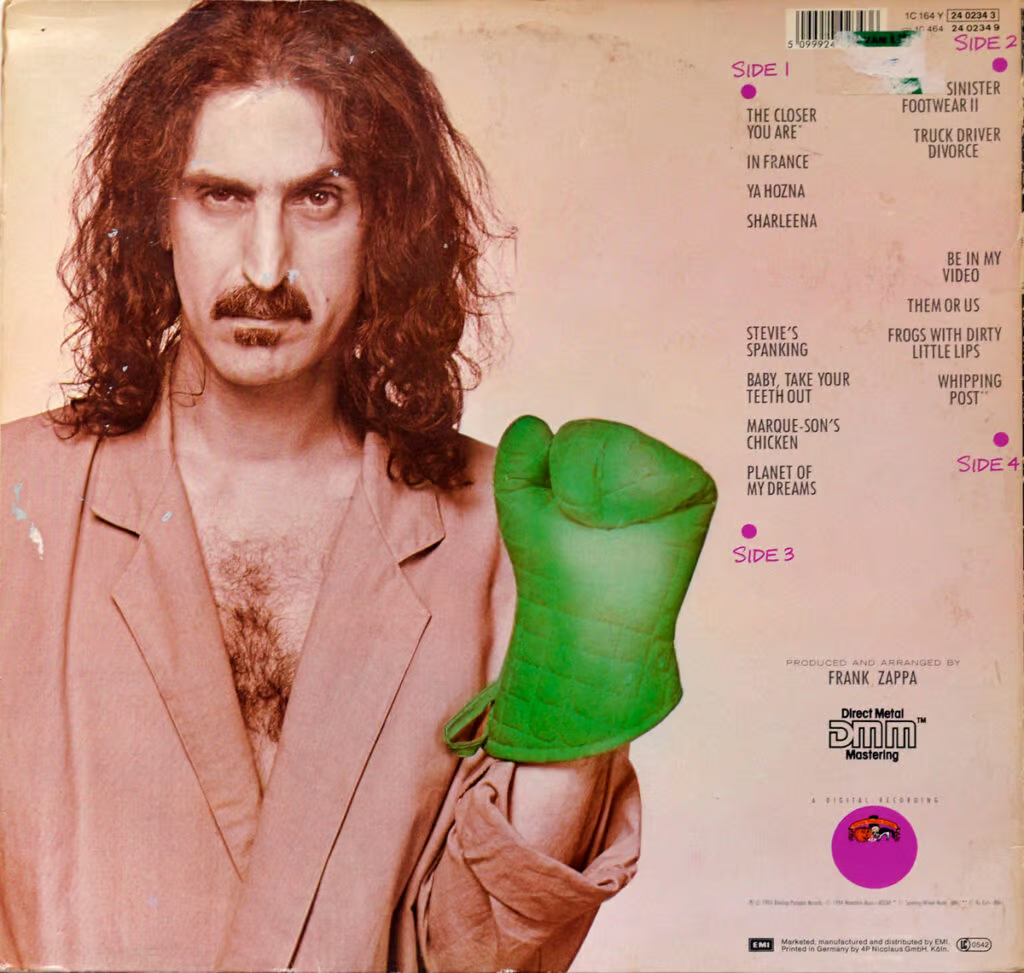
His 1972 science-fiction musical Hunchentoot never secured the necessary funding. Its libretto eventually surfaced in his 1984 book Them or Us, while fragments of its musical DNA migrated into other compositions, notably on Sleep Dirt (1979).
Then came Thing-Fish (1984).
A grotesque, politically radioactive assault on racism, eugenics, AIDS-related paranoia and the conventions of commercial musical theatre, it arrived as a triple-LP ‘original cast recording’ for a Broadway production that did not exist.
The estimated budget was $5 million. Zappa reportedly raised around $400,000.
Broadway never happened. An authorised, scaled-down fringe production eventually materialised at London’s Battersea Arts Centre in 2003, a decade after his death.
The absurd and the sophisticated were never mutually exclusive in Zappa’s universe
Even his ballet Sinister Footwear escaped the conventions of its own genre. Its 1984 premiere, conducted by Kent Nagano with the Berkeley Symphony, brought together orchestral music, dancers from the Tandy Beal Company and oversized puppets.
The absurd and the sophisticated were never mutually exclusive in Zappa’s universe.
Brecht, Stravinsky and the Beautiful Violence of Sound
Behind Zappa’s apparent irreverence lay a profound engagement with European avant-garde traditions.
His theatrical strategies invite comparisons with Bertolt Brecht and Kurt Weill, particularly their rejection of passive spectatorship. Brecht’s Verfremdungseffekt — the deliberate disruption of theatrical illusion — finds striking parallels in Zappa’s fictional universe.
Musically, Igor Stravinsky was another vital presence. Asymmetric metres, rhythmic dislocations, polytonality and sharp-edged woodwinds permeate Zappa’s compositions
The Central Scrutinizer in Joe’s Garage and the eponymous protagonist of Thing-Fish are not simply characters. They interfere with the narrative, interrogate it and expose its machinery.
The audience is never entirely allowed to surrender to the illusion.
Musically, Igor Stravinsky was another vital presence. Asymmetric metres, rhythmic dislocations, polytonality and sharp-edged woodwinds permeate Zappa’s compositions, alongside direct quotations from The Rite of Spring and Petrushka. The chamber-theatre worlds of The Soldier’s Tale and Renard offer further aesthetic parallels.
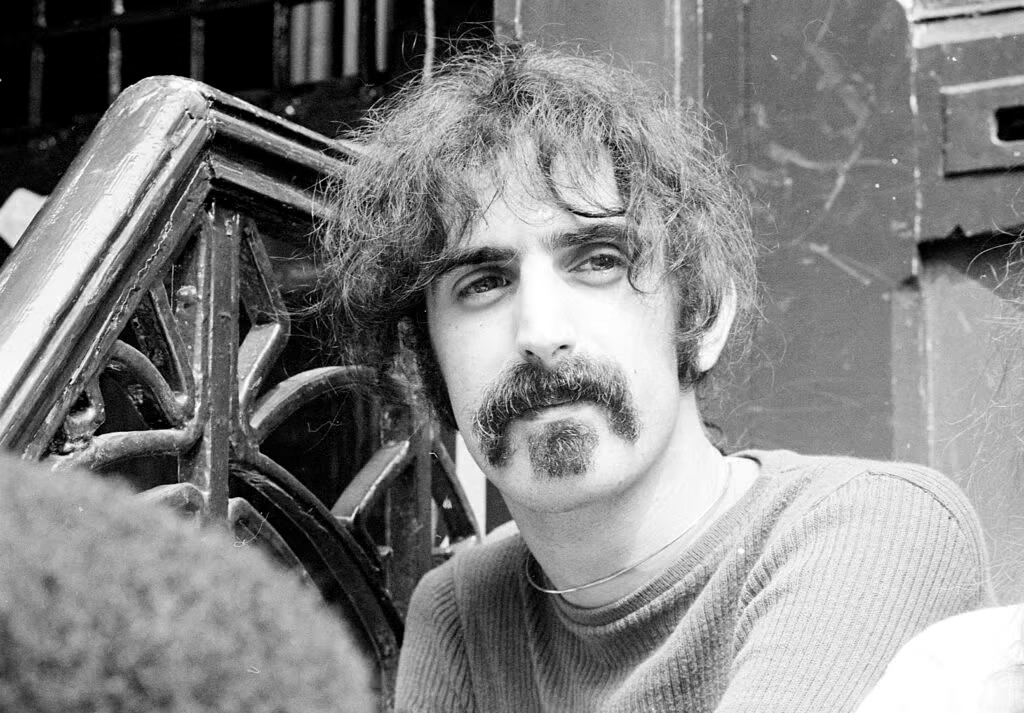
And then there was Edgard Varèse, whose conception of music as organised sound helped legitimise an entire acoustic universe beyond conventional musical hierarchies.
Environmental noise. Manipulated tape. Human voices. Orchestral percussion. Harmonic complexity.
Why should any of these elements be denied entry into the composition?
An Opera Inside a Piano
All these trajectories converged in Civilization Phaze III, the extraordinary posthumous double album released in 1994 and subtitled an “Opera-pantomime in two acts with choreographed physical activity.”
Across 113 minutes, Zappa constructed a theatrical universe that operated according to its own internal logic.
Spoken conversations recorded inside a grand piano function almost like operatic recitatives. They give way to expansive, digitally constructed Synclavier compositions — something akin to arias liberated from the human singing voice.
The architecture is simultaneously ancient and futuristic.
The work also embodies Zappa’s philosophy of Conceptual Continuity, variously articulated through his ideas of The Project/Object and The Big Note.
No artwork was necessarily an isolated event. Characters, sounds, phrases and musical motifs could migrate across albums, decades and artistic disciplines.
The past was not an archive. It was living material
For Civilization Phaze III, Zappa brought together recordings made inside a Steinway piano during the 1967 sessions associated with Lumpy Gravy and We’re Only in It for the Money, alongside new recordings from 1991.
More than a quarter of a century of creative activity converged in a single work.
The past was not an archive. It was living material.
The Theatre That Never Was
In 1993, Zappa negotiated with the Vienna Festival over a proposed world premiere in May 1994.
His vision involved automated lighting, digitally triggered scenic cues, dancers and mimes. Music, movement, technology and theatrical space would operate as components of an integrated artistic system.
The economics proved prohibitive.
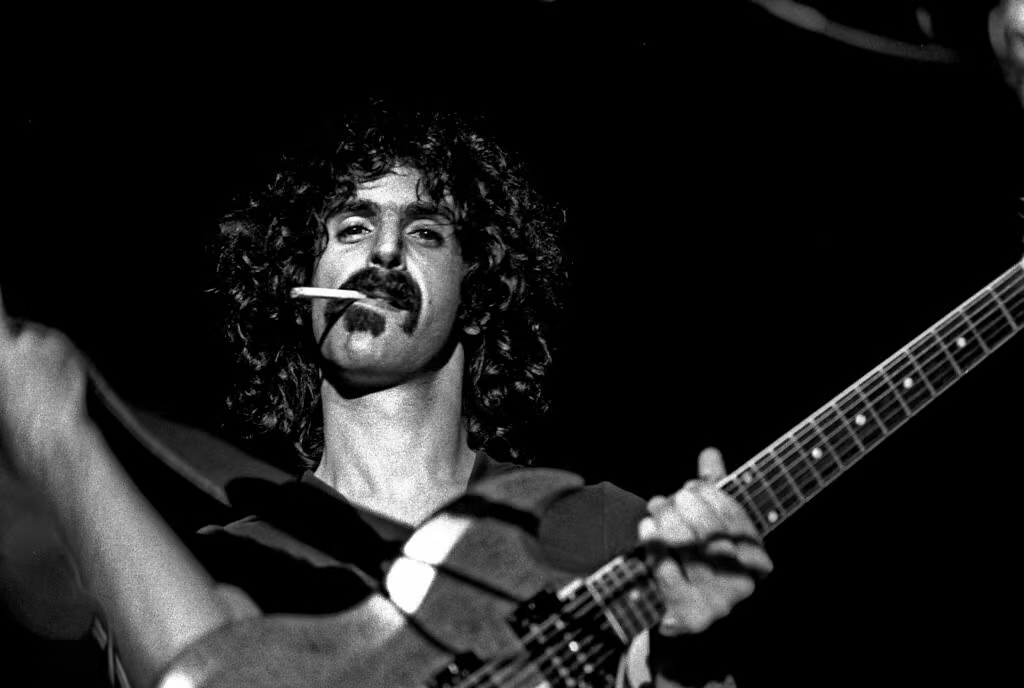
Theatre director Peter Sellars suggested that the work might be better suited to film. Informal discussions involving choreographer Jamey Hampton and Matt Groening also failed to produce a premiere.
Zappa completed the musical work before his death in December 1993. The theatre itself remained unrealised in its intended form.
There is something profoundly paradoxical about this. An artist who spent decades dismantling the conventions of performance ultimately created one of his most ambitious theatrical works without the physical theatre necessary to contain it.
Valley Girls and Digital Utopia
Zappa’s relationship with commercial success was equally unconventional.
The mainstream visibility generated by “Valley Girl” irritated him insofar as its novelty appeal overshadowed the compositional sophistication of Ship Arriving Too Late to Save a Drowning Witch.
But commercial success had its uses. Revenue from the single helped finance his 1983 recording sessions with the London Symphony Orchestra.
Pop culture could effectively subsidise the avant-garde.
Meanwhile, the Synclavier offered Zappa something that money alone could not guarantee: unprecedented compositional control, independent of the technical limitations of human performers.
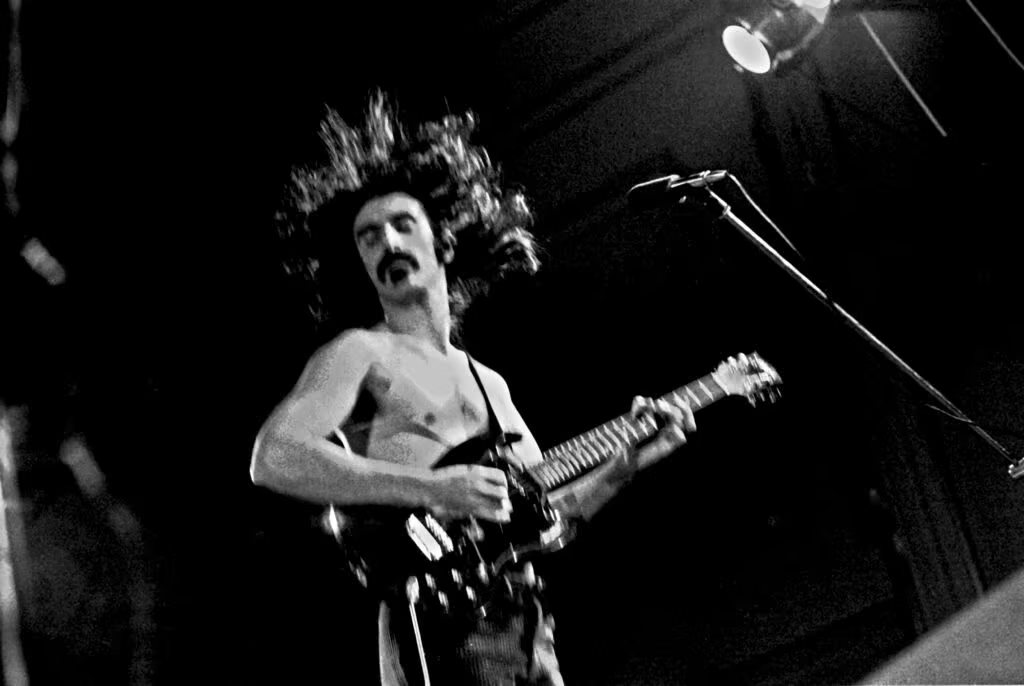
That independence did not diminish his appreciation of exceptional musicianship. His collaboration with Frankfurt’s Ensemble Modern, immortalised on The Yellow Shark (1993), represented one of his greatest artistic vindications.
Zappa never reached Utopia. But he made it audible
Here were musicians capable of engaging with his notoriously demanding scores with precision, commitment and enthusiasm. Technology and human virtuosity were not opposing forces. Both could serve the same radical artistic vision.
Utopia Has No Final Curtain
The Yellow Shark and Civilization Phaze III stand beside one another as monumental expressions of Zappa’s late creative achievement.
One celebrates the extraordinary possibilities of collective human performance. The other constructs a theatrical cosmos beyond the conventional physical stage.
According to Gail Zappa, upon completing the latter, he concluded:
“I’ve done everything that I can.”
There is a disarming simplicity to those words, coming from an artist whose life’s work was devoted to questioning what could be done.
Perhaps the most compelling way to approach Civilization Phaze III today is not as an unrealised theatrical production, but as a theatre that continues to assemble itself inside the mind of each listener. Its stage is imaginary. Its architecture is fluid. Its possibilities remain open.
Zappa never reached Utopia.
But he made it audible.