For nearly seven decades, the popular memory of Empress Elisabeth of Austria was tethered to Ernst Marischka’s 1950s film trilogy. Starring Romy Schneider, those post-war productions cemented Elisabeth as an innocent, naive fairy-tale bride designed to comfort audiences with domestic ideals.
When Netflix approached creator, head writer, and showrunner Katharina Eyssen following her 2019 miniseries Zeit der Geheimnisse, executives initially pushed for a similarly escapist, candy-colored romance. Streamer representatives favoured a style reminiscent of Bridgerton.

From Fairy Tale to Feminist Revolt
Eyssen, a graduate in screenwriting and dramaturgy from the Hochschule für Fernsehen und Film München who was born in Starnberg, firmly resisted that trajectory. Instead, she committed to a darker, historically grounded examination of aristocratic pressure in The Empress, aligning her artistic ambitions with European auteur drama and the generational tragedy of The Crown.
To craft the cinematic and emotional register for the first season, the production recruited director Katrin Gebbe, renowned for psychologically rigorous art films such as Tore tanzt and Pelikanblut.

A tower of insights, experiences and opinions
Art in all forms. That is what we are all about - and now you can join our world. We need you - and we believe you need us too. Let us share dreams and visions!
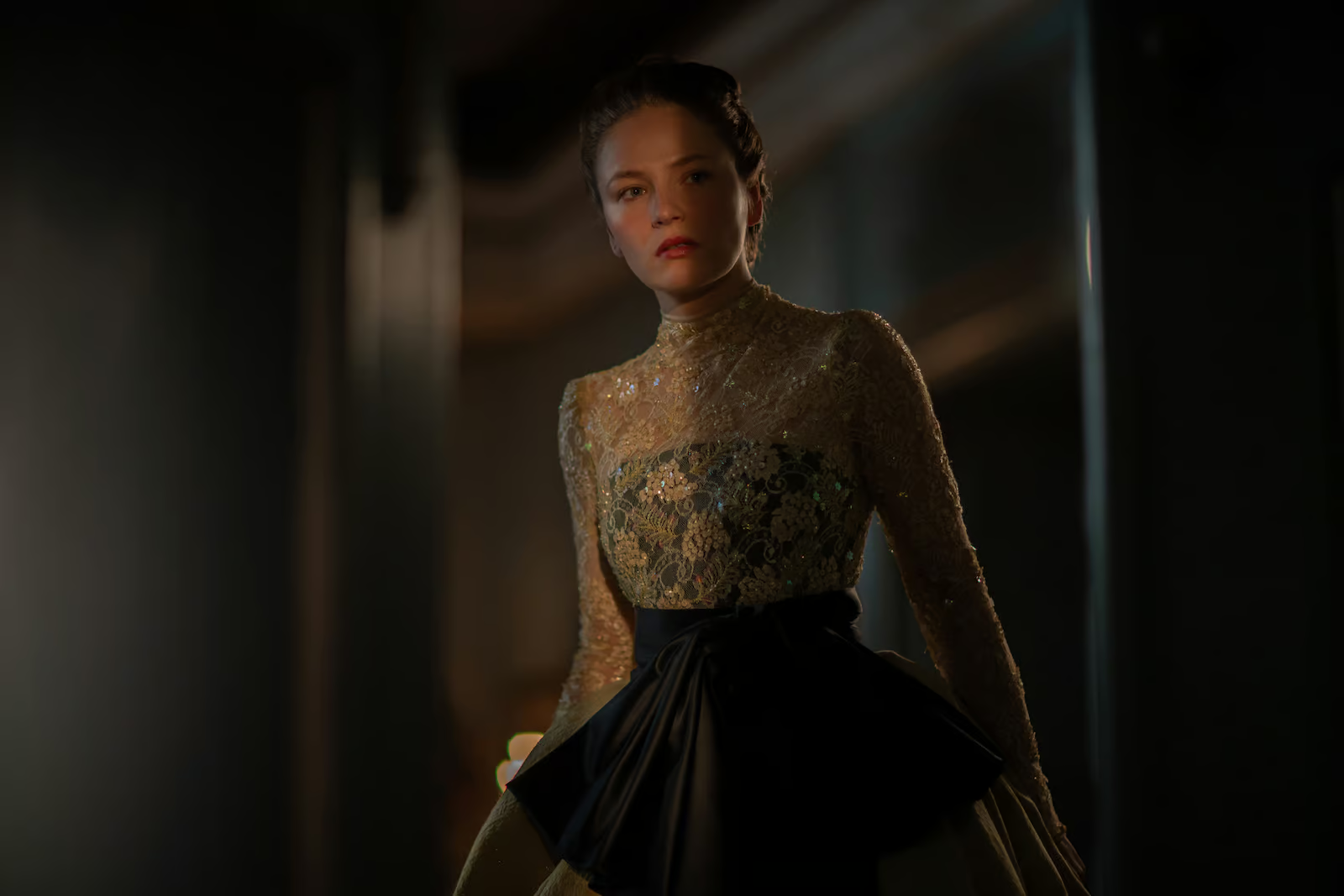
The creative team of The Empress implemented heavy, muted palettes and severe architectural framing influenced by Yorgos Lanthimos’s The Favourite
Together, Eyssen and Gebbe dismantled the romantic sentimentality surrounding the Habsburg dynasty. Working alongside production designer Matthias Müsse, Gebbe rejected genre clichés like gilded surfaces, gleaming whites, and bright imperial reds. In their place, the creative team implemented heavy, muted palettes and severe architectural framing influenced by Yorgos Lanthimos’s The Favourite.
The Architecture of Oppression
Rather than staging a decorative escape, Gebbe constructed the Viennese court as an oppressive, claustrophobic machine designed to strip royal women of their autonomy.
The series does not shy away from the institutional violence inflicted on women, staging humiliating public virginity examinations conducted by prelates and physicians
In Die Kaiserin, Elisabeth (Devrim Lingnau Islamoğlu) is reconfigured as an unconventional, reluctant 16-year-old intellectual who writes poetry, bristles against gendered confinement, and faces threats of asylum commitment from her own family prior to her engagement.

Once within the Hofburg palace, the setting operates as a panoptic system oriented entirely around dynastic reproduction. The series does not shy away from the institutional violence inflicted on women, staging humiliating public virginity examinations conducted by prelates and physicians, the physical agony of restrictive corsetry, and the immediate estrangement of mothers from their offspring.
Elisabeth is reduced by protocol to an imperial vessel.
The Woman Behind the Throne
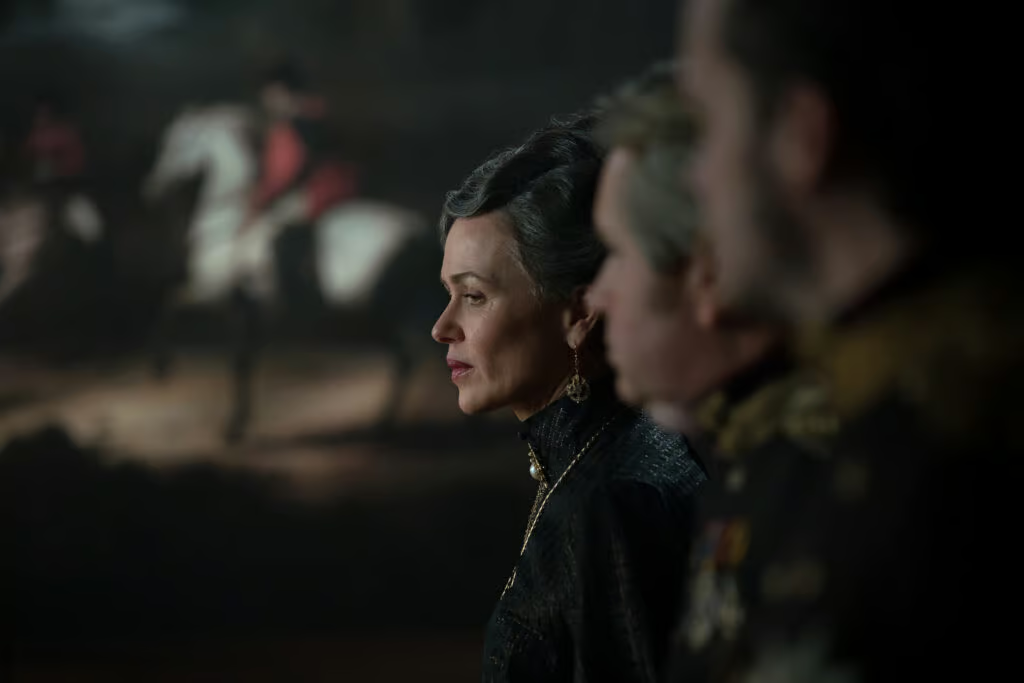
This re-examination of power extends beyond Elisabeth. Archduchess Sophie (Melika Foroutan), long cast by pop culture as the cruel mother-in-law, is completely reframed as a pragmatic, clear-eyed stateswoman.
Barred from formal rule by patriarchal succession laws, Sophie acts as the de facto guardian of an empire surrounded by insecure men, including her son Emperor Franz Joseph (Philip Froissant) and Archduke Maximilian (Johannes Nussbaum).
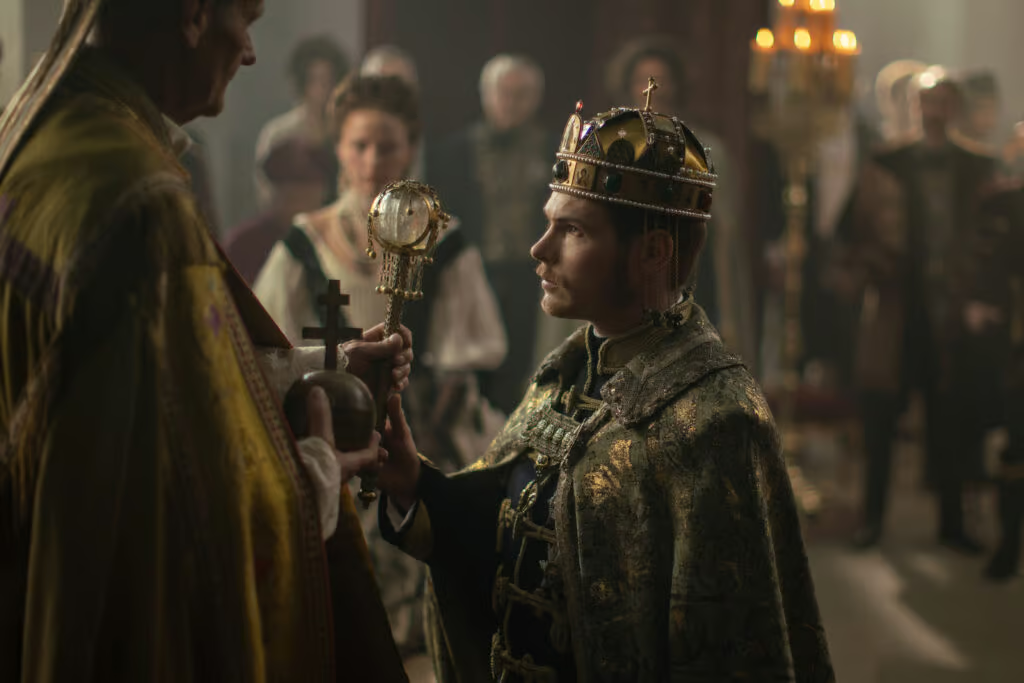
For 68 years, Emperor Franz Joseph occupied one of Europe’s most powerful and loneliest positions, ruling as Emperor of Austria and later also as King of Hungary. In the series, power offers remarkably little freedom
Exercising power through backroom diplomacy, dynastic alliances, and strategic concessions, her rigid enforcement of court etiquette is presented not as innate malice, but as a calculated shield to protect the monarchy from internal collapse following the 1848 revolution and an impending war with Russia.
The Emperor Is Also a Prisoner
One of the more compelling achievements of The Empress is its refusal to reduce its male characters to predictable patriarchal archetypes.
Franz Joseph (Philip Froissant) is a case in point. Beneath the imperial uniform is a complex, sensitive and, by the standards of his time, surprisingly modern man.
Elisabeth offers Franz something beyond love. She brings an independent mind, social awareness, political imagination and an instinctive connection with the people
For 68 years, he occupied one of Europe’s most powerful and loneliest positions, ruling as Emperor of Austria and later also as King of Hungary. In the series, power offers remarkably little freedom. Surrounded by advisers driven by ambition, intrigue and self-interest — including his younger brother, Archduke Maximilian (Johannes Nussbaum) — Franz must navigate a political landscape in which trust is a rare commodity.
Elisabeth changes that equation.
He is captivated by her from the moment they meet, and his love for her endures despite the turbulence of imperial life. But Elisabeth offers him something beyond love. She brings an independent mind, social awareness, political imagination and an instinctive connection with the people.
She becomes, in many respects, his most valuable political adviser. Sometimes she is the author of the ideas, while Franz becomes their public voice.
Ava is a disenfranchised working-class insurgent who kills an Austrian noblewoman, assumes her identity, and infiltrates the court as a lady-in-waiting to aid an anti-imperialist revolt
There is a fascinating paradox here: the woman whose autonomy the imperial system seeks to suppress becomes one of the emperor’s most valuable intellectual allies.
She challenges the very institution she helps sustain.
Revolution Enters the Palace
Eyssen also broke from the historical canon by introducing a fictional character who pushes the narrative beyond aristocratic squabbles: Countess Leontine von Apafi, born Ava (Almila Bagriacik). Ava is a disenfranchised working-class insurgent who kills an Austrian noblewoman, assumes her identity, and infiltrates the court as a lady-in-waiting to aid an anti-imperialist revolt.
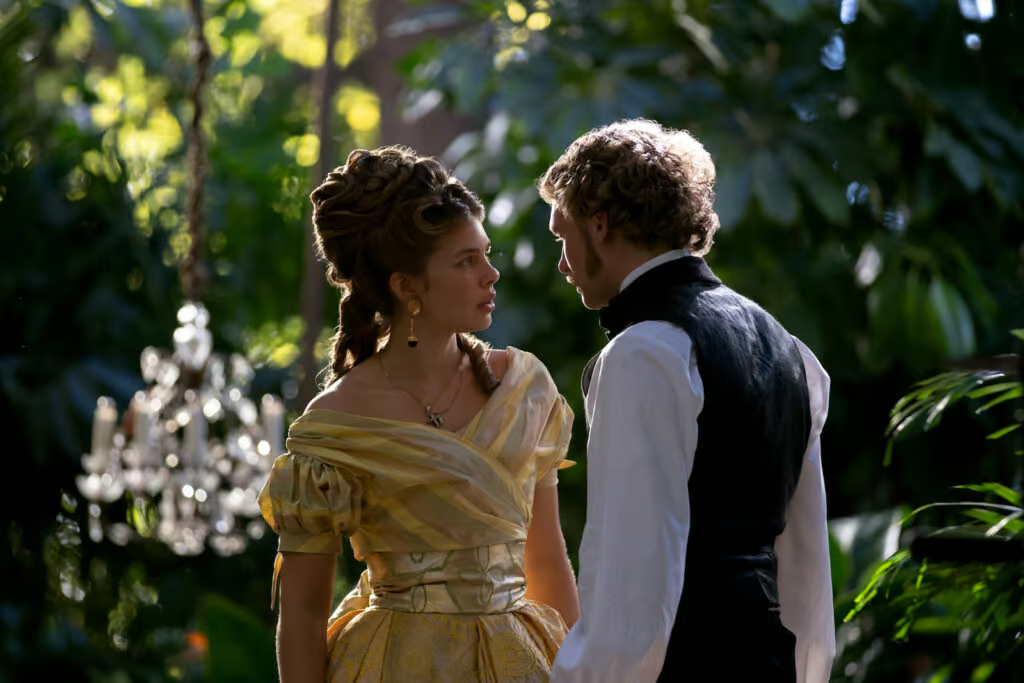
By granting a marginalized woman lethal agency and political purpose, the show subverts the convention that period dramas must restrict female power to upper-class parlour games, channeling the broader public’s simmering rage directly into the palace’s private quarters.
The Empress: The Death of an Imperial Myth
The creative bet paid off critically and commercially. Premiering in September 2022, Die Kaiserin logged more than 47 million viewing hours in its first four days, quickly scaling to the top of Netflix’s global non-English charts. In 2023, the production secured Best Drama Series at the 51st International Emmy Awards, while Eyssen earned Germany’s Blauer Panther award for her writing.
The women of Die Kaiserin are defined by conscious political agency, navigating and contesting a world built to contain them
The series forms part of a wider feminist reassessment of Empress Elisabeth across European cinema, emerging alongside Marie Kreutzer’s Corsage and Frauke Finsterwalder’s Sisi & Ich.
Rather than serving as passive figures in a nostalgic royal pageant, the women of Die Kaiserin are defined by conscious political agency, navigating and contesting a world built to contain them.